
 By
By 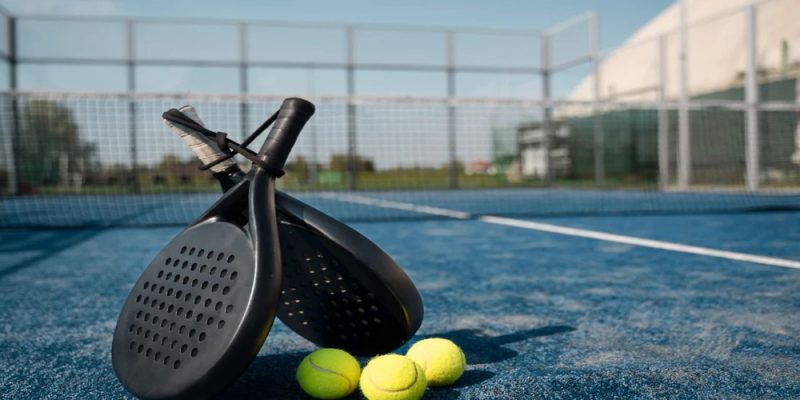
Introduction
Tennis players, coaches, and people are all asking the question: which sport is easy to learn, more engaging, and better for reconstructing skills? While both sports borrow parts from tennis, they offer very different knowledge in terms of activity, game plan, equipment, and gameplay. For these reasons, before selecting, you have to learn about padel vs pickleball.
For players observing a transition from tennis to padel or tennis to pickleball, understanding the differences can help establish which sport best fits their aims, characteristics, and performance style.
What Is Padel?
Padel is usually played in doubles on a circumscribed court surrounded by a net and mineral mesh walls. The obstructions are few in the game, similar to compact, which assembles longer rallies and more crucial play.
Padel rackets are solid with punctured holes instead of strings, and the deceptive serve creates a smooth game for beginners to start fast. However, progressive padel demands superior positioning, teamwork, and expectation.
Many tennis players love padel cause it still rewards court knowledge and ammunition construction while seeing less stress on the body than regular tennis.
What Is Pickleball?
It imposes upon a smaller court, using paddles and a lightweight, soft ball accompanying holes. The game is famous for allure, accessibility, public air, and an active education curve.
Compared to tennis, pickleball includes smaller court distances and plainer strokes, making it appealing for performers of all ages. At higher levels, though, pickleball is highly bright and response-familiarizing.
The rise of the sport has still sparked contrasts between pickleball vs tennis.
Padel Vs Pickleball
Read the below padel & pickleball guide to learn about the differences between them.
1. Court Size and Movement
One of the largest differences in padel vs pickleball is court flow.
Tip:
Tennis players who enjoy running, upholding, and constructing points may adapt faster to padel. Players who prefer fast hands and compact movement can enjoy pickleball more.
2. Playing Style and Strategy
Actionable comparison:
Great Padel and Pickleball resources:


3. Transition From Tennis
Tip:
Tennis players who rely heavily on topspin may initially struggle in pickleball cause control and placement are often more influential than power.
4. Learning Curve
Tip:
However, many players find padel more complementary to traditional tennis movement patterns.
5. Competitive Atmosphere
The atmosphere is one of the most important aspects of padel vs pickleball.
Tip:
Parents presenting children to racket sports may find either sport valuable for expanding coordination and confidence.
Get my free tennis book to improve your Tennis, Padel, Pickleball skills!
Conclusion
A bigger adjustment for tennis performers with a pickleball mindset is developing the right pickleball psychology. Players who accommodate mentally tend to advance faster than those who try to beat every rally. For many tennis performers, the best answer may simply be to try both and uncover which style feels most natural and pleasing.









Comments